The best climate companies

stopped leading with climate.

The market moved. The money started going elsewhere. The word "green" stopped meaning anything. We build brands that win on the strength of the technology and the size of the opportunity, with sustainability as the proof.

See the work

The best climate companies stopped leading with climate.

The market moved. The money started going elsewhere. Theword "green" stopped meaning anything. We build brands thatwin on the strength of the technology and the size of theopportunity, with sustainability as the proof.

See the work
Our Perspective
Branding a climate company is about making complex, world-changing technology appeal to the investors, partners, and customers who decide whether it scales.

Climate investing changed

For a decade, "climate-first" was the pitch. Lead with the mission, signal your values, paint everything green and growing. That framing built a category but also flattened it. The climate-tech landscape today is where brands blur together: the same natural palette, the same earnest tone, the same promise to save the planet. When everyone looks like a cause, no one looks like a company worth investing in.

We formed this view by building brands in this space. We repositioned Greenlyte from a climate-tech company into an energy company, helping them give the category a name in Liquid Solar. When G2VP came back to us, it wasn't for a refresh. The climate-first identity that once defined the firm had started working against it, scaring off founders who didn't self-identify as climate companies. We rebuilt their presence around what they'd always been: a growth-stage investor backing hard industrial technology at commercial scale.

The pattern repeats where capital is harder to raise and slower to close. Investors and customers reward clarity over conviction. The companies that break through keep their sustainability mandate but stop leading with it.

In our view, a climate company's brand should sell the technology and the opportunity first, and let the impact follow as evidence. Make the invisible tangible enough that a non-technical investor gets it in seconds.


Principles for branding climate tech

Create the category

The fastest way out of a sea of sameness is to name the space you lead. We reframed Greenlyte around "Liquid Solar," a category it now owns.

Make the science tangible

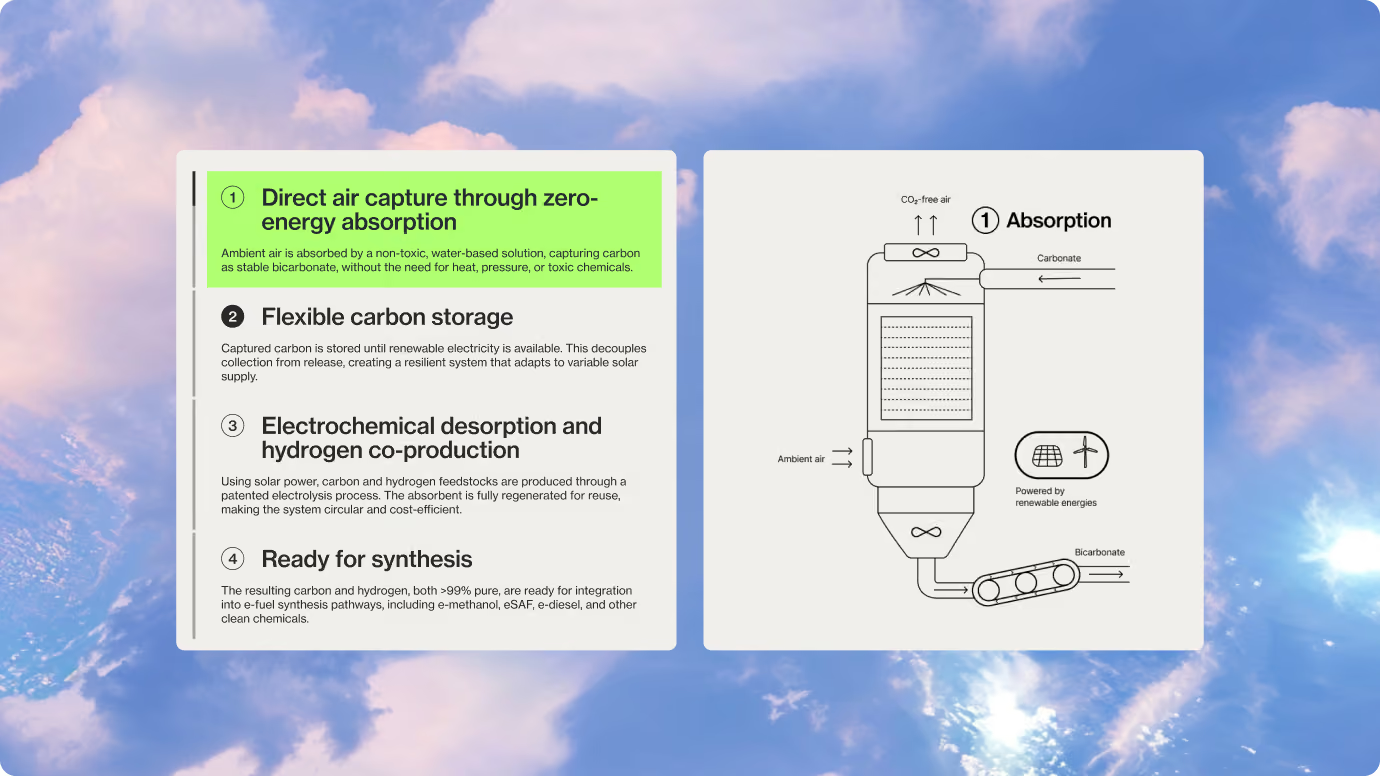
Breakthrough climate tech is often impossible to see and hard to explain. We made the concept of XGS Energy's water-independent geothermal system accessible without sacrificing credibility, and refined the story for multiple audience types under one unified voice.

Investors back conviction

The strongest climate brands launch in step with the raise, giving founders and investors a shared story to rally behind. Applied Carbon relaunched alongside a $21.5 million Series A and an XPRIZE Carbon Removal finalist nod.

Escape “green”

Forest palettes and leaf logos signal a category, not a company. We built Phytoform a bright, optimistic identity rather than defaulting to clinical biotech sterility.

One story, multiple executions

Climate companies rarely sell to one audience. We built EcoCart a system that flexes across enterprise merchants and end consumers.

Build for returns and the planet

The companies investors back show both. Applied Carbon's positioning leads with farm profitability and measurable carbon removal together.

Our climate portfolio

Greenlyte

Breakthrough hybrid DAC-hydrogen technology, and a story too complex to tell in a crowded, shifting market.
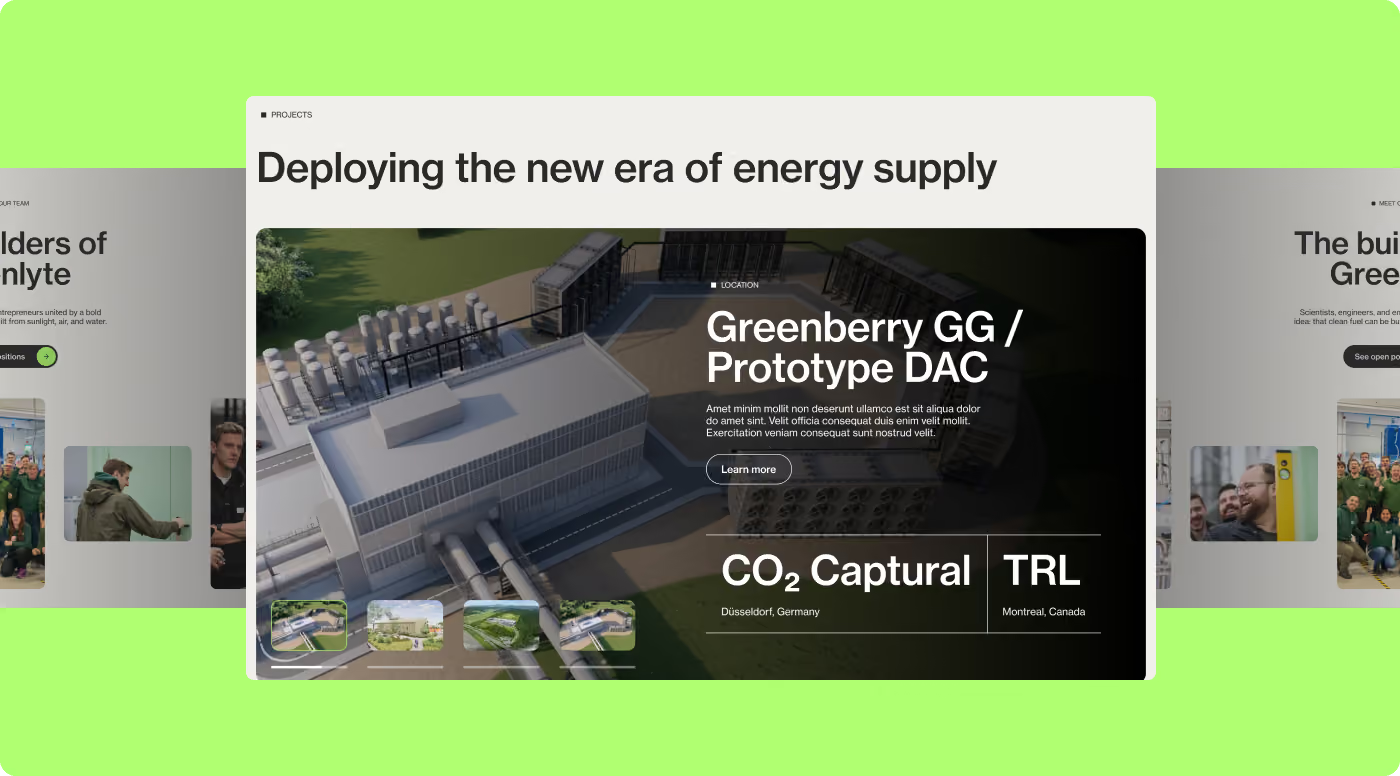
We reframed Greenlyte from a climate-tech company into an energy company. The narrative explains how solar electricity becomes liquid energy for the fuels and chemicals that hard-to-abate sectors depend on. The refreshed brand and site put that story at the center, with a website that makes a complex process clear to any visitor and user journeys built for industrial customers and technology partners.
Now owns a new energy category: Liquid Solar.
Clean fuels
DAC + hydrogen
Case Study

Applied Carbon

A niche process that few people understood.
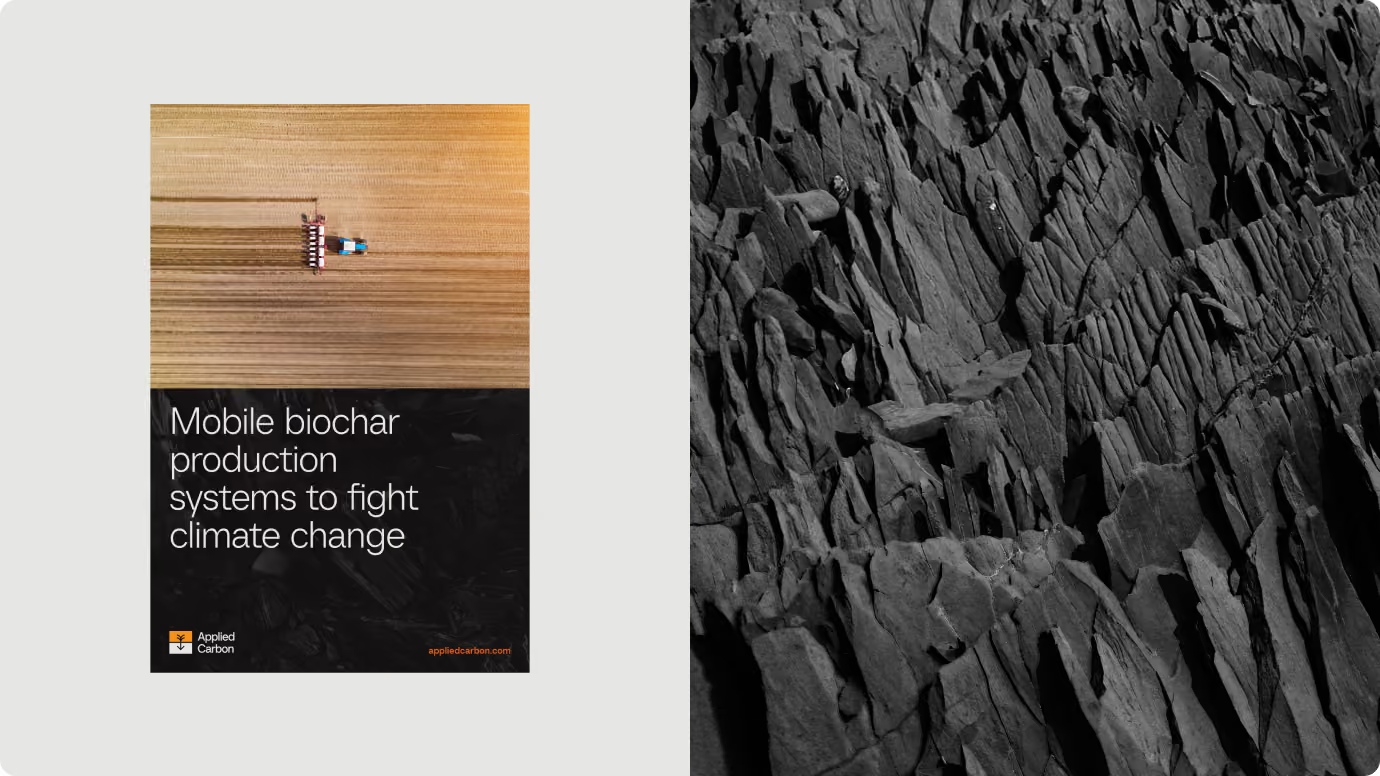
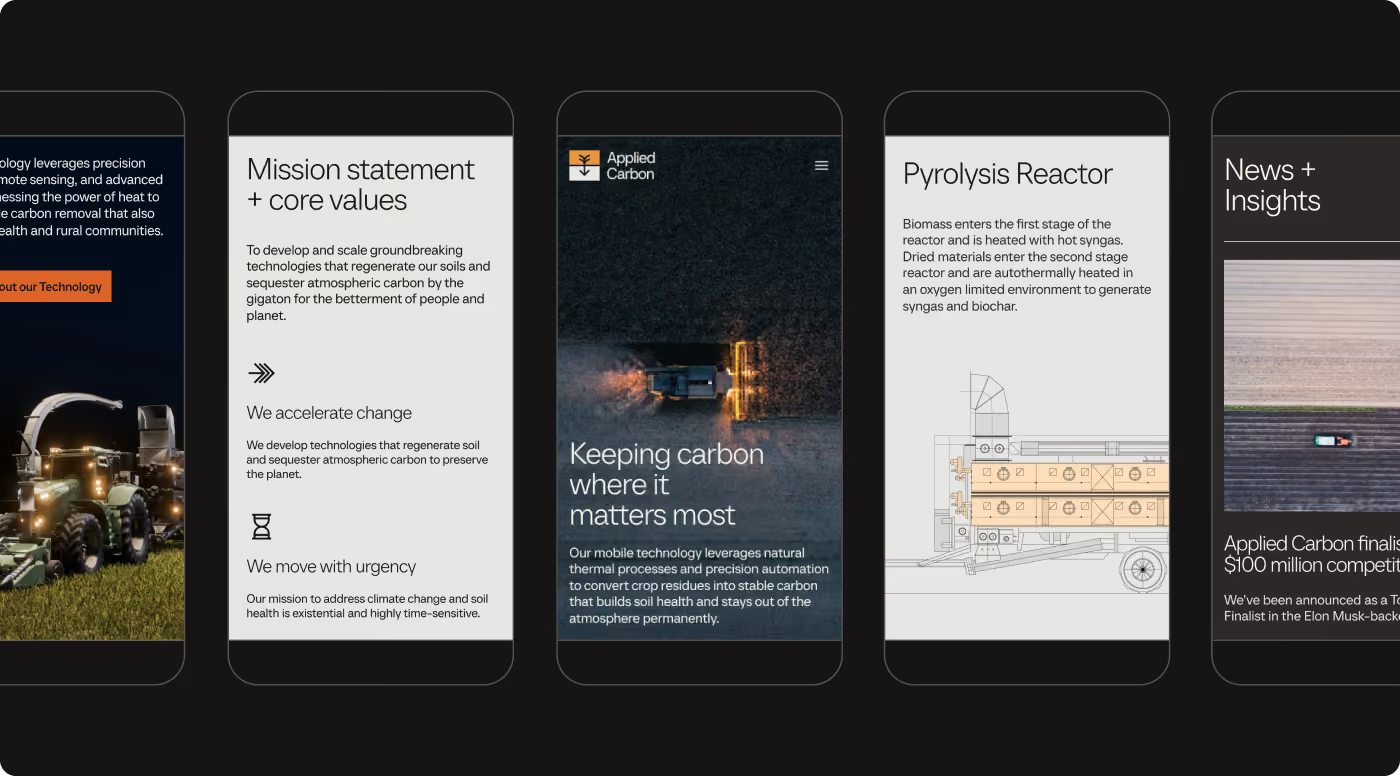
We repositioned Applied Carbon around its dual impact: higher farm profitability and permanent carbon removal. The identity is grounded in colors derived from their process, paired with technical linework that echoes the precision of the engineering at the core of the product. Custom infographics make pyrolysis and biochar production accessible to both farmers and climate conscious partners, and the modular site reinforces credibility while supporting ongoing growth.
$21.5 million raised at relaunch, plus an XPRIZE Carbon
Removal finalist nod.
Carbon removal
Farm robotics
Case Study

XGS Energy

Turn a complex, water-independent geothermal breakthrough into investor-ready communications.
We built XGS Energy a digital presence structured around what investors needed to see: technology, team, and market positioning, organized for quick, confident evaluation. We made the modular, closed-loop system understandable without sacrificing scientific credibility, and refined the same story for energy partners, co-developers, and decarbonized-utility buyers under one unified voice.
Additional $10 million raised in Series A funding.
Geothermal
Case Study
EcoCart
A redesigned site built to flex across enterprise merchants and climate-conscious shoppers. Launched ahead of a $14.5M Series A; now works with 2,000+ brands including Walmart, Zegna, and SkullCandy.
Raised $14.5 million Series A.
Consumer offsetting
Phytoform Labs
A bold, scalable brand for a company engineering more nutritious, resilient crops with AI and gene editing. The identity fuses science and nature to avoid being seen as a clinical biotech.
Turned gene-editing science into a brand governments, business, and people trust.
Ag-bio
Gene editing

G2 Venture Partners

A growth-stage firm founded by former senior partners of Kleiner Perkins' Green Growth Fund backing industrial technology at commercial scale.
Repositioned away from climate-first framing, toward portfolio-led conviction.
Climate VC
Range

FAQs

How should a climate-tech startup brand itself before a raise?

Lead with the technology and the size of the opportunity, not the mission. Investors fund clarity and conviction in a category, so name the space you intend to lead, make the science legible in one scroll, and treat the brand launch as part of the raise, not an afterthought.

What makes branding a climate company different?

Climate companies sell complex, often invisible technology to several audiences at once. The brand has to translate deep science into commercial value without leaning on the generic "green" cues that make the whole category blur together.

Should a climate company lead with sustainability or commercial value?

Lead with commercial value, and let sustainability serve as proof. The market has moved away from climate-first narratives, and the companies that win frame impact as evidence the business works, not as the reason to back it.

How do you make deep climate tech understandable to investors?

Start from what the investor needs to evaluate, then build the story outward. We use plain-language explainers, custom infographics, and a clear site architecture to make breakthroughs like geothermal heat exchange or biochar legible without diluting the science.

What's the most common branding mistake climate startups make?

Defaulting to the category's visual clichés. A natural palette and a leaf logo signal "climate company" in general, but they do nothing to explain why this company is different or worth funding.

Building something the planet needs? Let's make sure the market gets it.

Contact us